You don’t need a bunker, a budget, or a weekend. You need about ninety minutes and someone who’ll tell you what actually matters. That’s this page, and it’s free.
The standard, the plan and the exact list to build it yourself — all free, none of it behind an email. And if you’d rather it just showed up, we pack it to that same list.
No email · Your result appears the moment you finish · what happens where I live
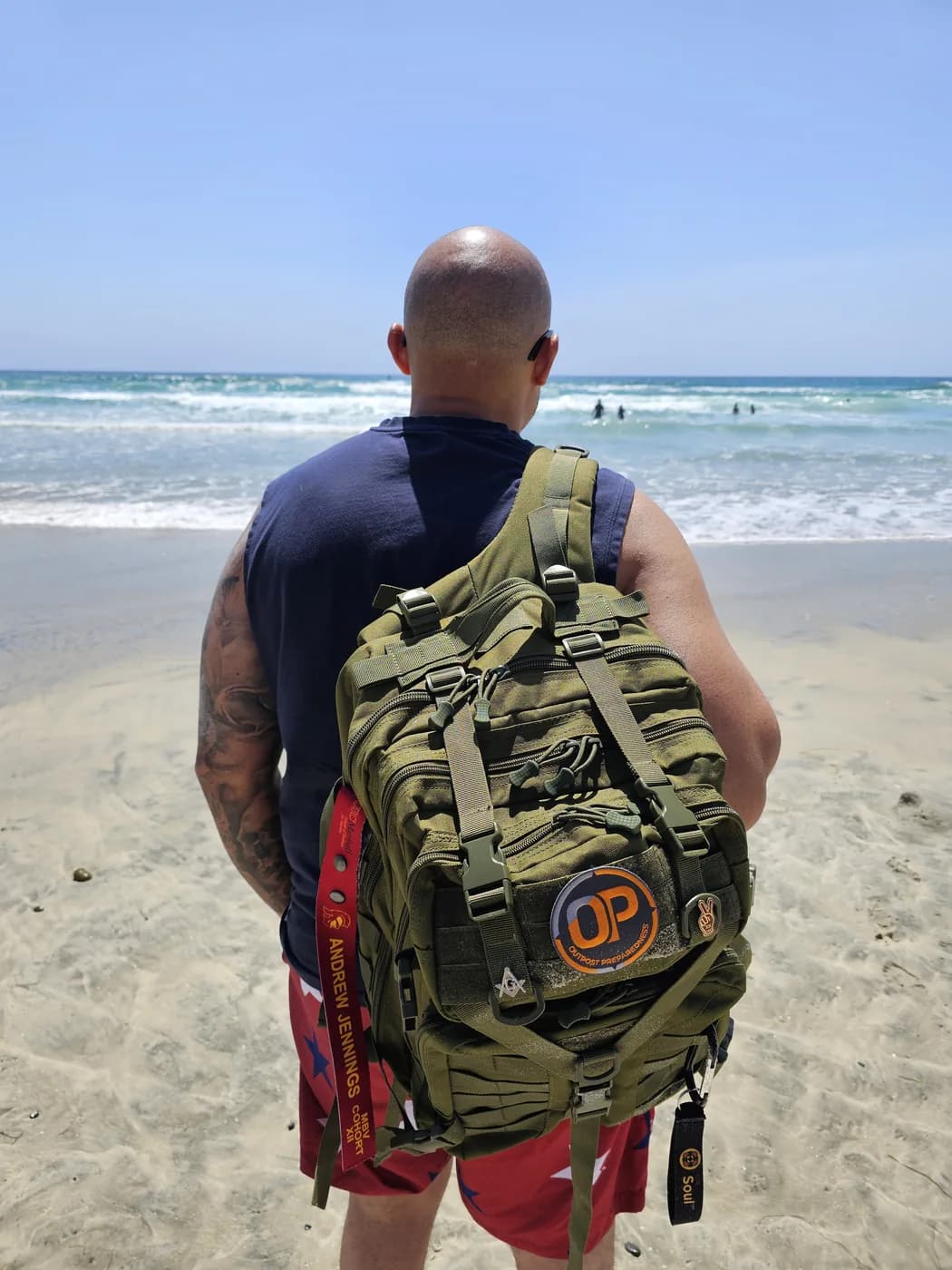
Preparedness has never had that. So we wrote it. Three levels, and every one of them is earnable with gear from any hardware store — we publish the entire list with quantities and what each thing costs. You never have to buy anything from us to reach any level.
Out the door in ten minutes with what you need. This is the level that saves the most lives, because leaving early is the decision.
Seventy-two hours with no outside help. Water, food, power, medication, documents.
You can get someone out who can’t get themselves out. Very few households can say this honestly.
Almost half had thought about it and never done it. When we asked why, the two answers were “too expensive” and “not sure what I really need.” So we did the obvious thing: made the part that costs nothing genuinely free, and told you exactly what to do first. Nothing on this page is behind an email.Source: Outpost go-bag survey, 176 respondents, 2025
None of them costs money. Together they take under an hour. If you do nothing else on this page, do these.
Eleven minutes with your phone. It becomes your insurance claim, and it costs nothing.
Empty it on the floor. Put back only what you can explain the use of. Most people have never done this once.
One place near home, one outside the area. Say it out loud, then have the youngest person repeat it back.
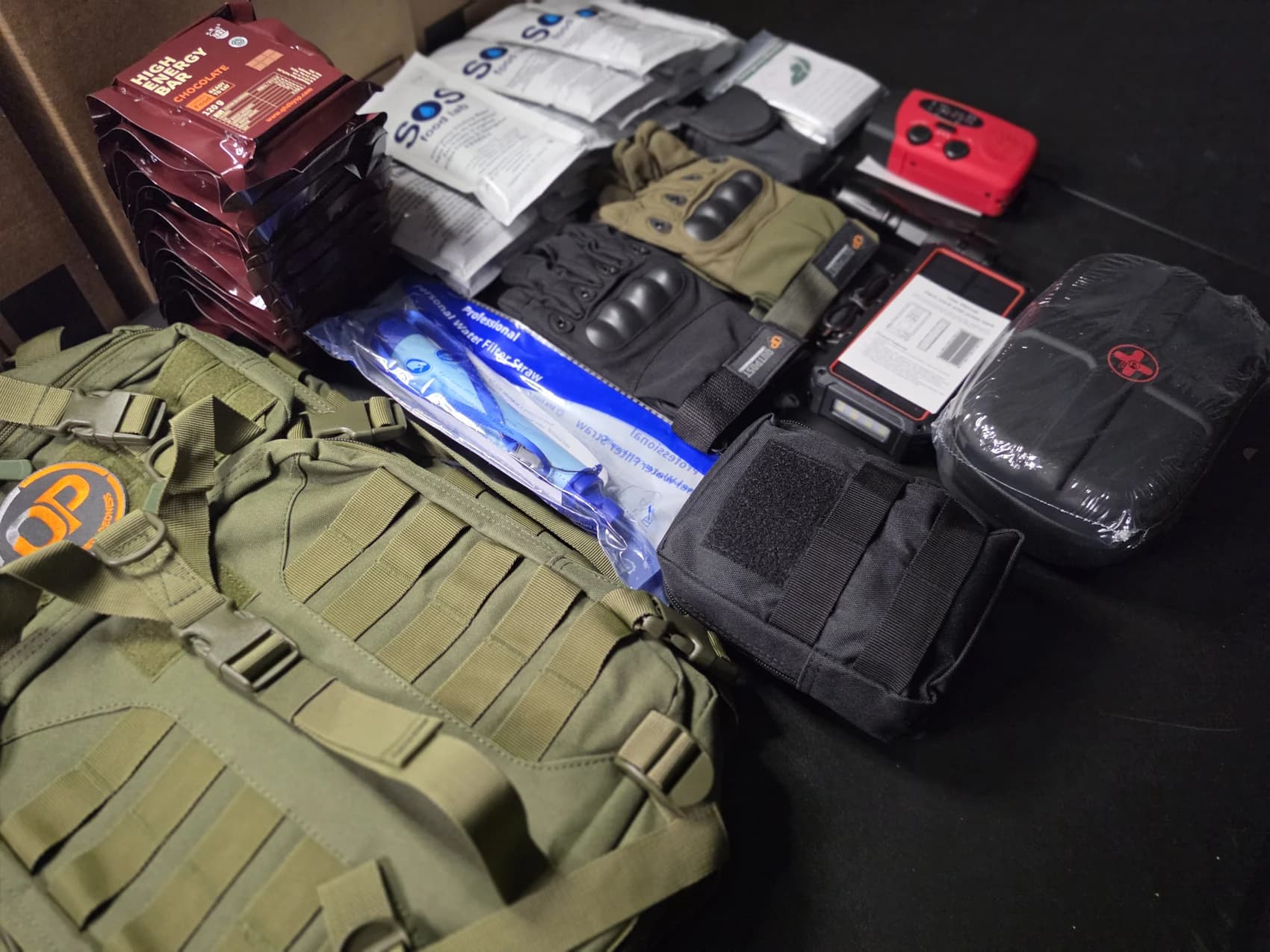
The most common reason people gave us for never buying a kit was that it’s too expensive. That’s a fair thing to say about something you can’t see inside of.
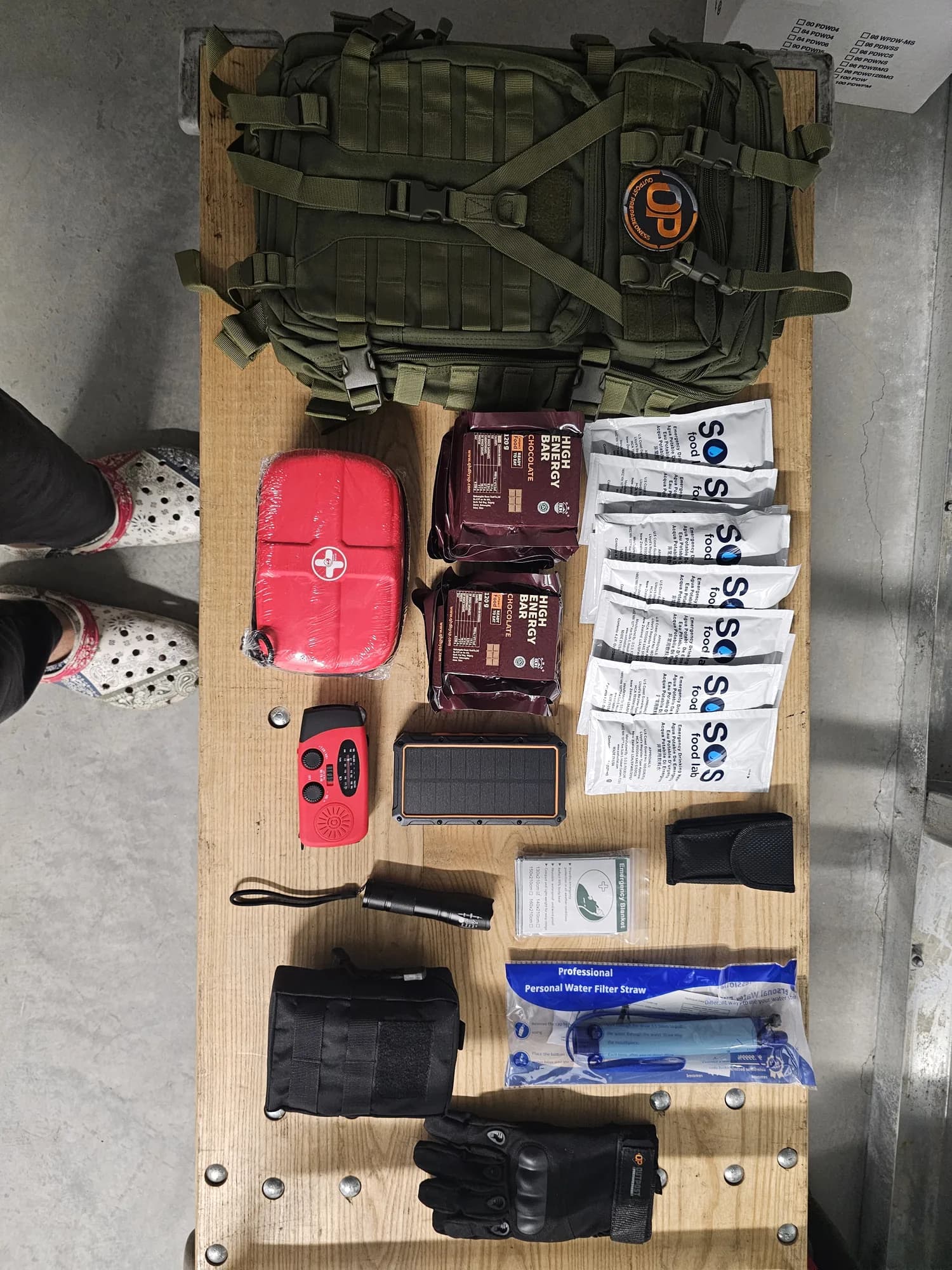
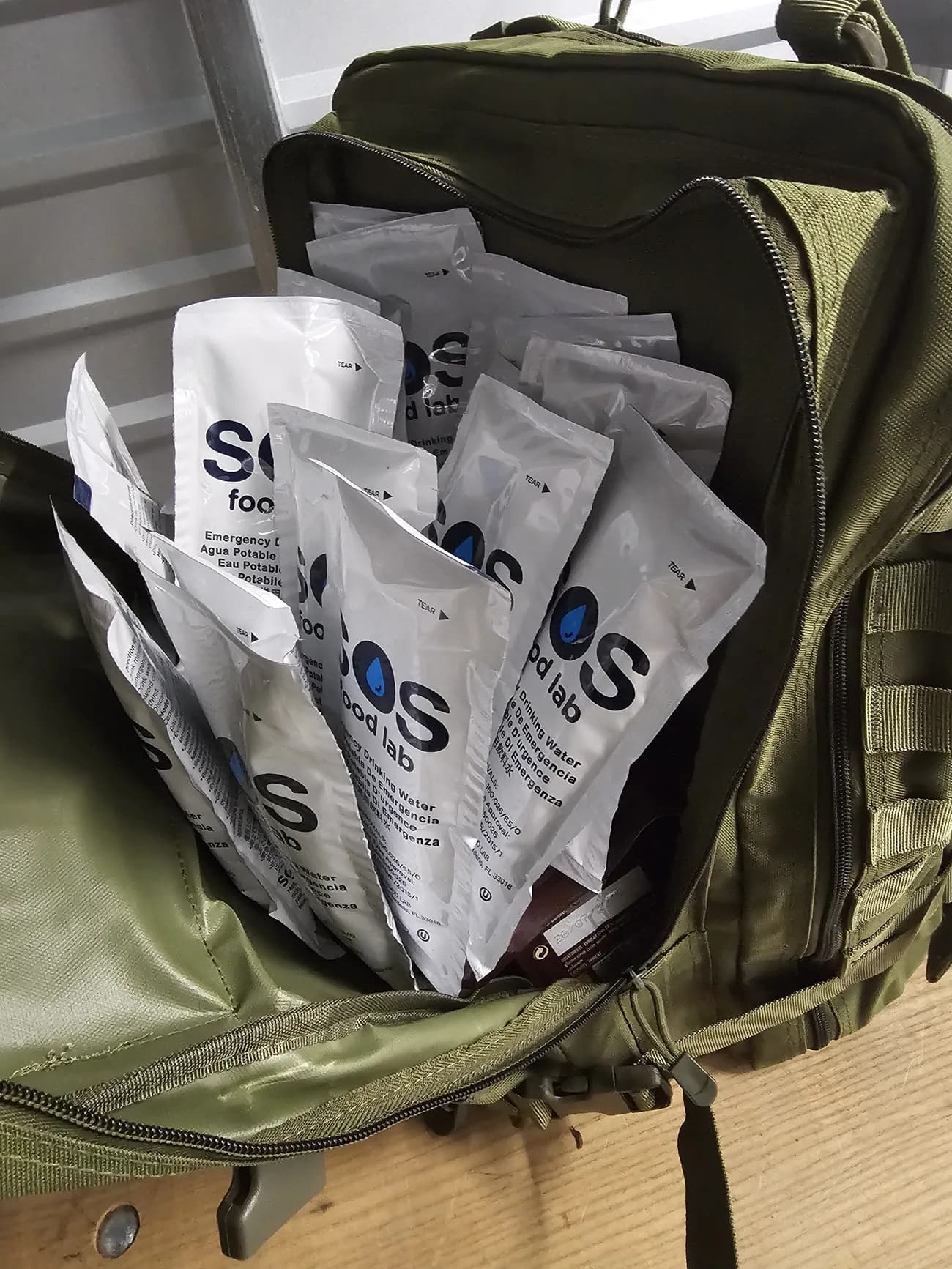
So here it is on the table, mid-build. Work gloves, a solar power bank, an emergency radio, water pouches, ration packs, a medical kit and a water filter straw, counted out beside the bag they go into. Twelve components in all — the full list, with quantities and what each one costs at retail, is published and free.
If you’d rather build it yourself from our checklist, that’s genuinely fine. The list is free and it always will be.
See the full checklist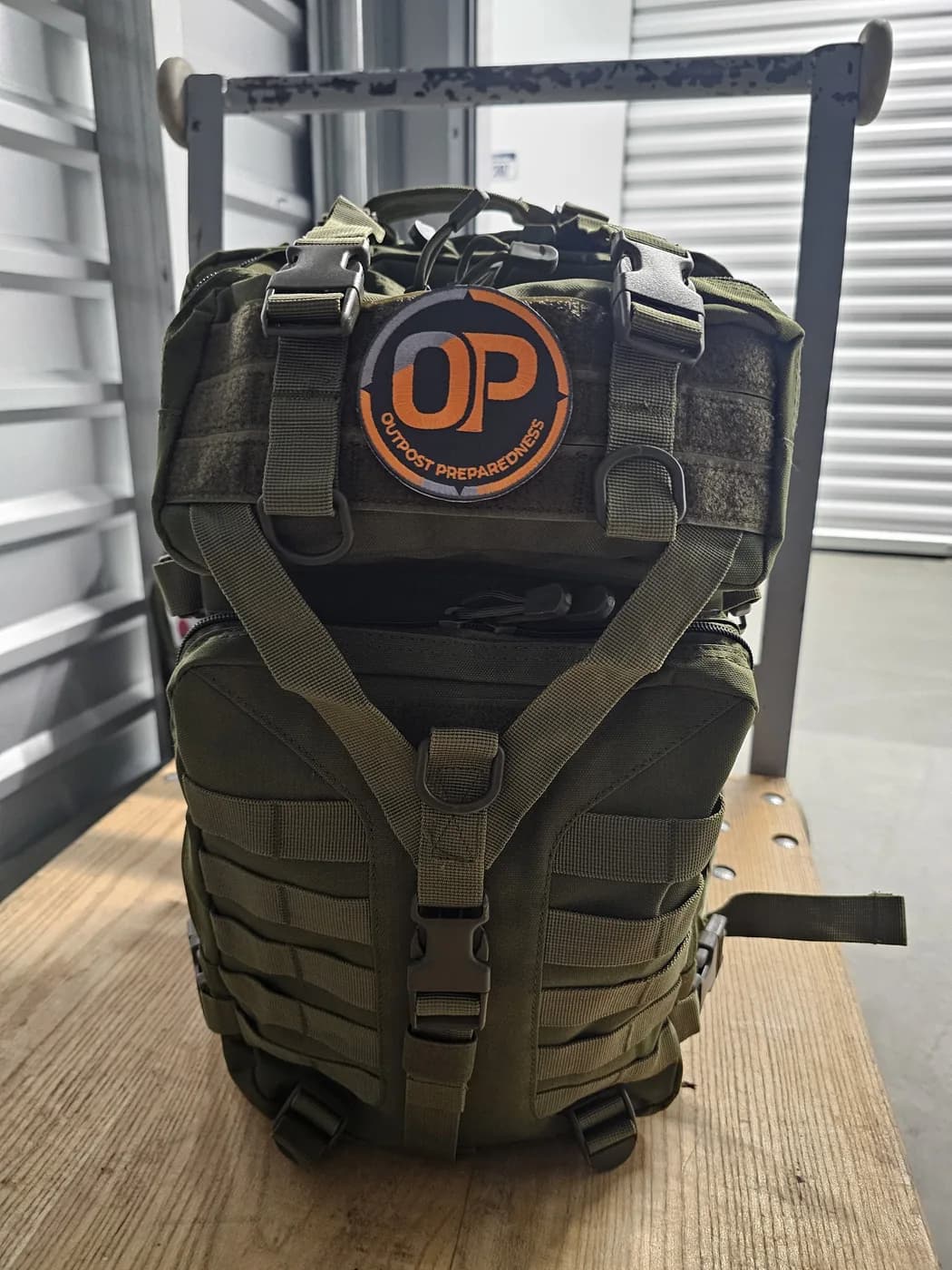
Building it yourself runs about $332 and an afternoon of sourcing, and we would genuinely rather you did that than did nothing. If you would rather it just showed up, this is that.
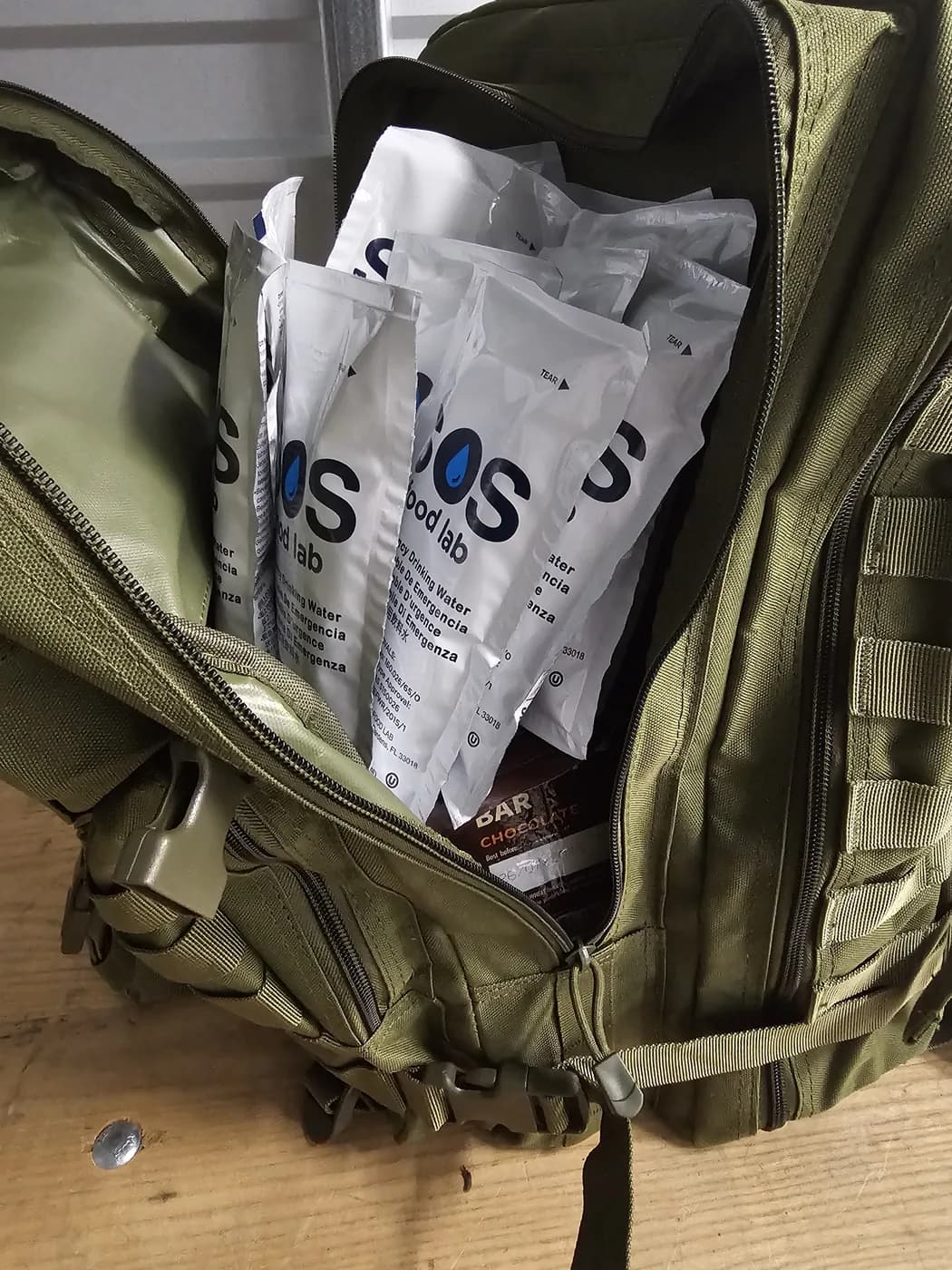
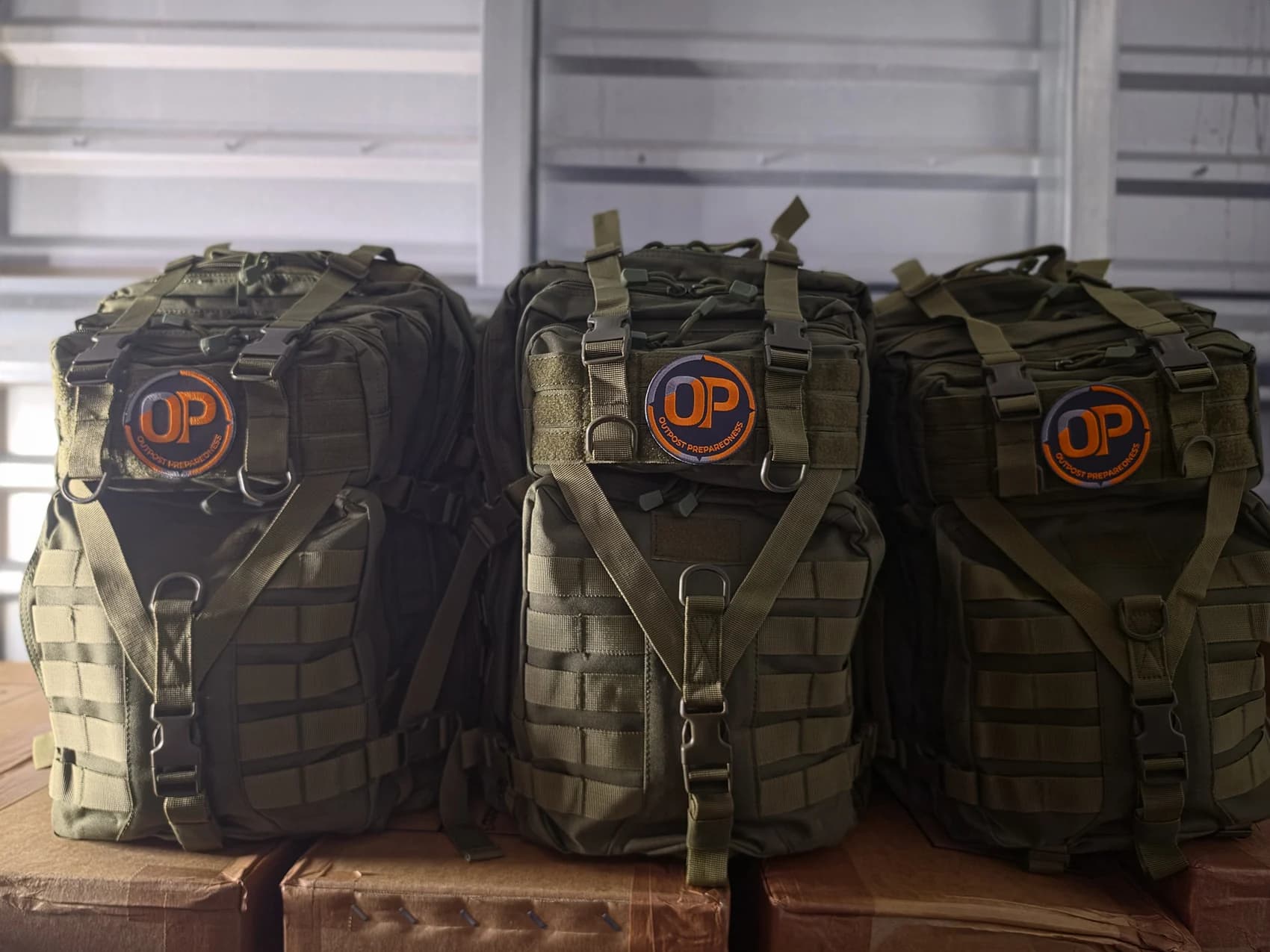
Thirteen things in a 50L pack — 15 ration packs at 7,125 kcal on a twenty-year shelf life, 16 sealed water pouches and a filter straw, medical, power, light and tools. Ships from San Diego with the S.A.F.E. Digital Vault.
We’d rather you built it from the list than did nothing at all.
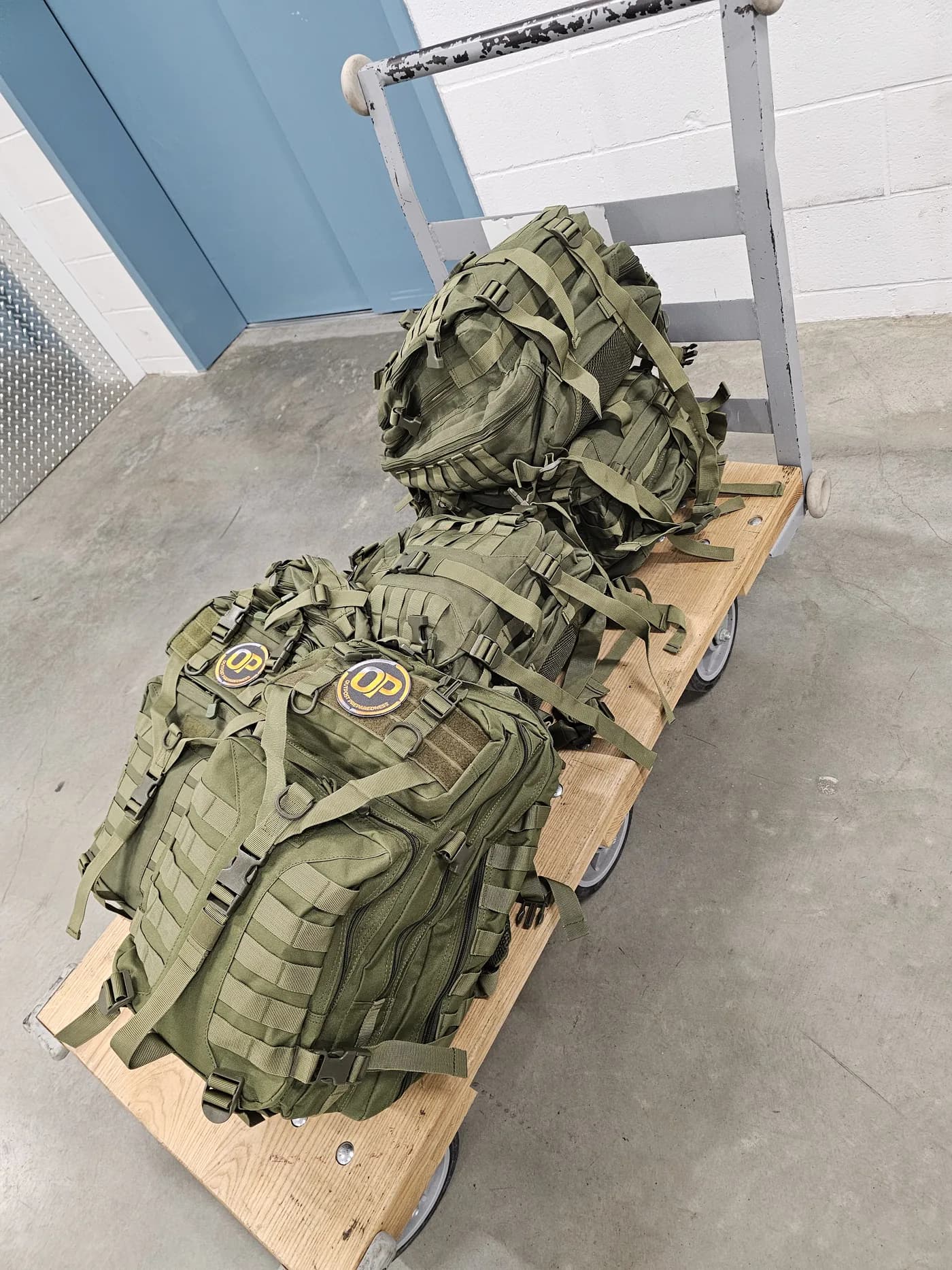
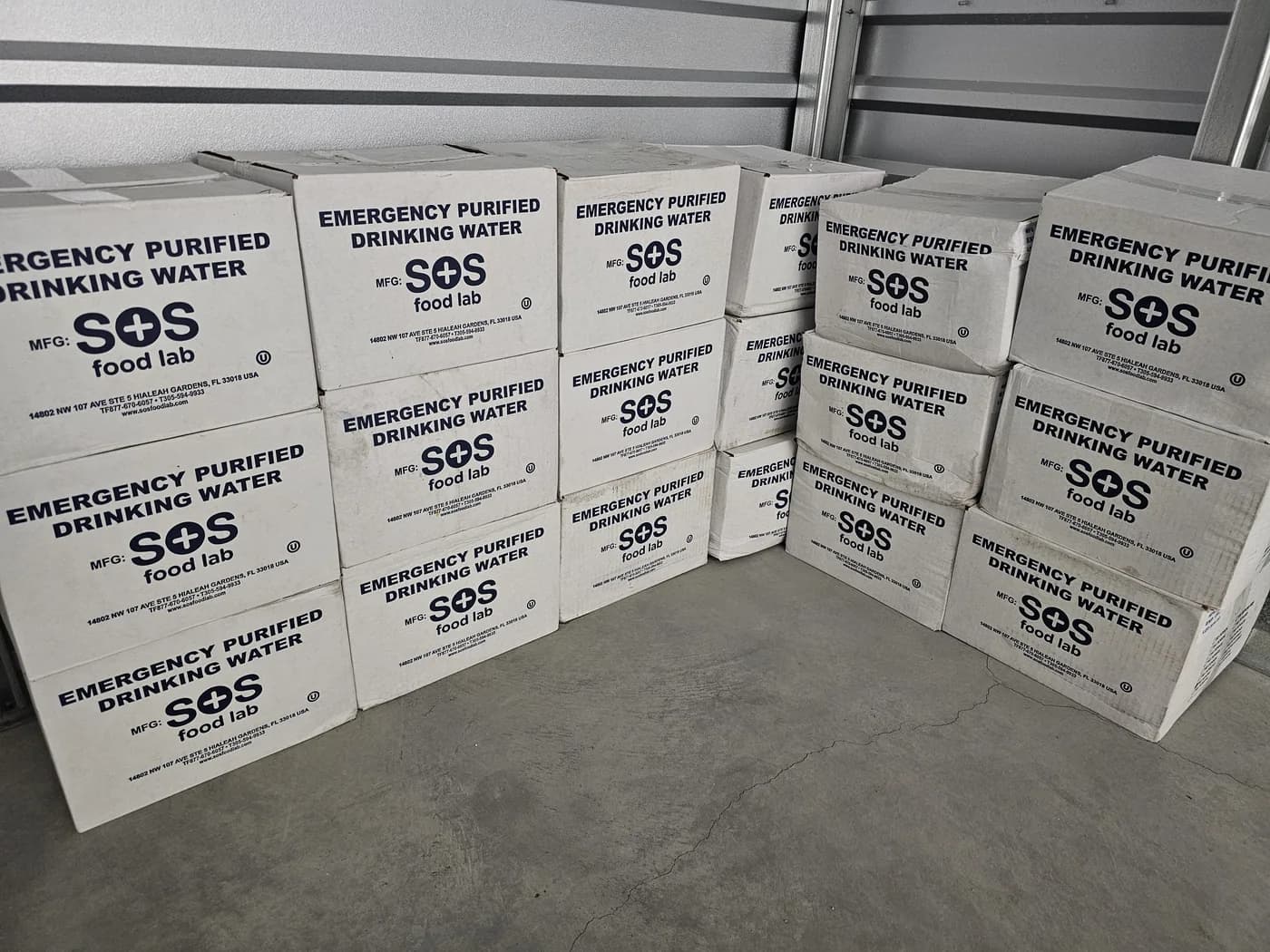
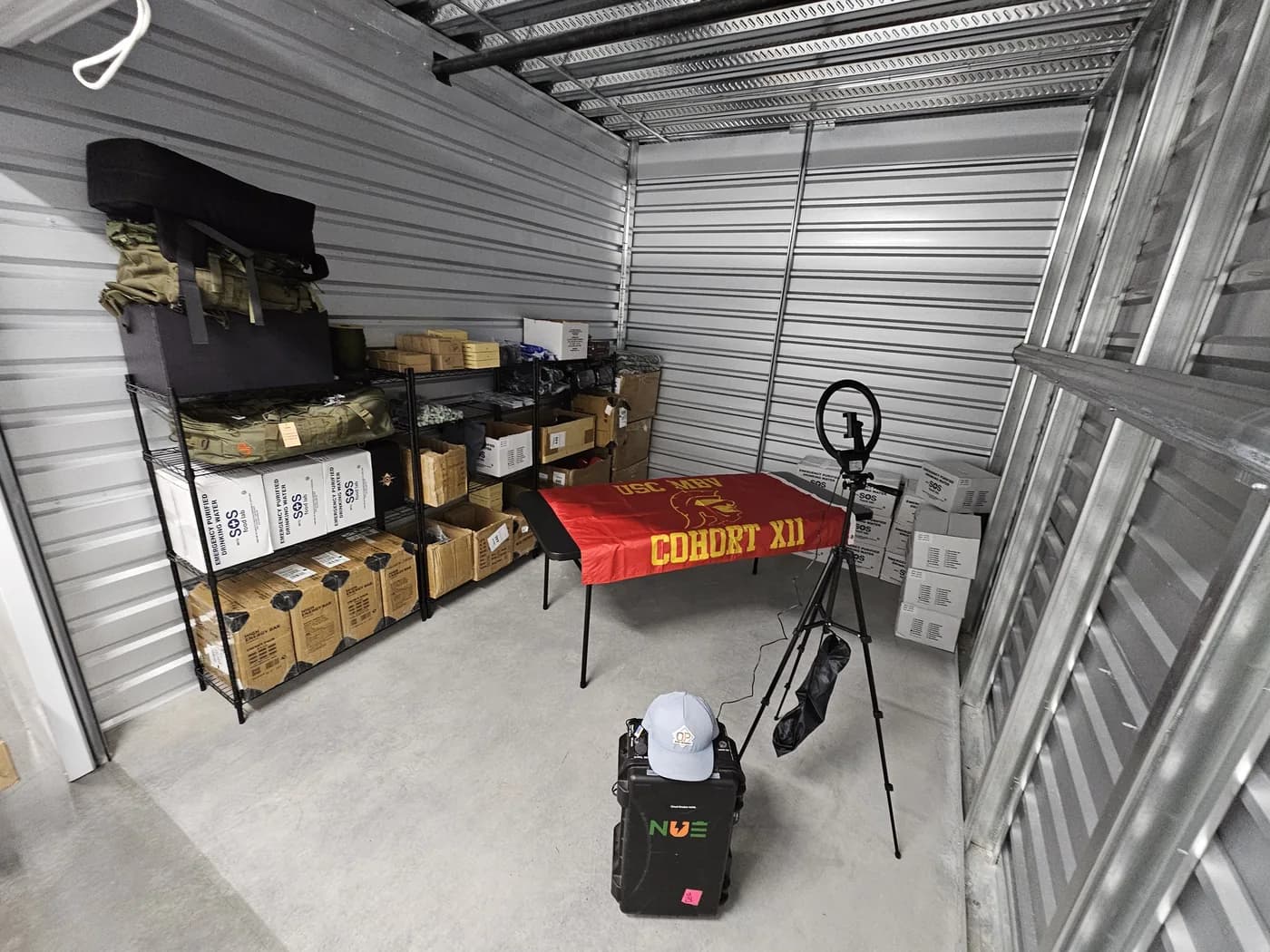
Large orders get built to your spec, not ours. These are from a run for the Kansas Department of Labor — counted out, packed and palletised here in San Diego. Tell us the headcount and what the building already holds, and the list changes to suit.
Ten in the infantry, ten in logistics. Retired Master Sergeant. Planning what several hundred people carried was the job, not a hobby.
Airport Terminal Management has been the primary service provider at Los Angeles International since 1997 — 700 people working for 45 airlines. When a passenger can’t walk to the gate, ATM’s team is who moves them, and they use our transfer slings to do it.
The Dept. of Labor didn’t stop at equipment. Evacuation chairs and ProMove slings for the people who can’t take the stairs. Training for the staff who’d be carrying them. DrewOS to hold the compliance record and flag who needs help before anything happens. And 72-hour kits, because the first three days are the ones you cover yourself. The same 72 hours Kansas covered in that building is the 72 hours we’re talking about in your house — different roof, same clock.
Service-Disabled Veteran-Owned Small Business. We don’t claim thousands of customers, because we don’t have thousands of customers.
When we asked what people worry about most, the top answer wasn’t a hurricane or an earthquake — it was losing power. The federal data agrees: severe storms and flooding are roughly 60% of the 736 major disaster declarations issued since 2015. Hurricanes are about a tenth. Tornadoes are under three percent.
What kills people afterwards is the generator. Portable generators cause roughly 100 unintentional carbon monoxide deaths a year in the United States, and they cluster in the days after a storm when the power is out. Carbon monoxide is odourless, and by the time you are confused enough to notice, you are too confused to act. Outside, far from the house, never in a garage with the door open.
About 70% of winter storm deaths happen in automobiles. Roughly 100 more people a year die while shovelling snow, and over half of those are cardiac. The safest thing most households can do in a snowstorm is stay off the road, and stop shovelling before they are tired rather than after.
Carbon monoxide, when the heat fails and people bring a generator or a grill inside — generators are the single largest source of non-fire CO deaths. And hypothermia, which claims around 1,300 Americans a year. The house going cold is survivable. What people do about it is what is not.
In June 2020, 41% of US adults had avoided medical care because of COVID concerns — 12% skipped urgent or emergency care and 31% skipped routine care. The households that struggled were the ones with a prescription, a chronic condition or a caregiving duty and no plan for any of them.
Ice brings the lines down across a wide area at once, so restoration runs into days rather than hours. That is what makes it dangerous — the longer the power is off, the more likely somebody brings a generator or a grill somewhere it should not be.
Each of these is the specific failure mode — the thing that harms people, which is almost never the thing they prepared for — and the one change worth making tonight. Where there’s a number, its source is named.
What kills people afterwards is the generator. Portable generators cause roughly 100 unintentional carbon monoxide deaths a year in the United States, and they cluster in the days after a storm when the power is out. Carbon monoxide is odourless, and by the time you are confused enough to notice, you are too confused to act. Outside, far from the house, never in a garage with the door open.
More than half of all flood deaths are vehicle-related. It takes twelve inches of moving water to carry off a small car and eighteen to move a larger one. It is almost never a road you do not know — it is the one you have driven a thousand times, where you cannot see how deep it is or whether the road is still there underneath.
The wind stops, the power stays off, and the generators come out. After Hurricane Ida, Louisiana hospitalised dozens for carbon monoxide poisoning inside the first 48 hours. Cash matters here too — when the grid is down the card readers are down with it, and the store that is open cannot take your money.
In the Camp Fire, 85 people died, most within the first twelve hours. Most of them were older residents whose homes burned before anyone could reach them — not people who chose to stay, people who could not get out on their own. The roads out of Paradise gridlocked and some abandoned their cars and ran. The decision that saves you is made before the smoke, not during it.
Carbon monoxide, when the heat fails and people bring a generator or a grill inside — generators are the single largest source of non-fire CO deaths. And hypothermia, which claims around 1,300 Americans a year. The house going cold is survivable. What people do about it is what is not.
About 70% of winter storm deaths happen in automobiles. Roughly 100 more people a year die while shovelling snow, and over half of those are cardiac. The safest thing most households can do in a snowstorm is stay off the road, and stop shovelling before they are tired rather than after.
Ice brings the lines down across a wide area at once, so restoration runs into days rather than hours. That is what makes it dangerous — the longer the power is off, the more likely somebody brings a generator or a grill somewhere it should not be.
Since 1996, 815 people have been killed in mobile or manufactured homes — 53% of everyone killed at home by a tornado, in housing that makes up under 6% of American homes. Anchor failure is the usual cause. If you live in one, the plan is not to shelter in place. It is to know, in advance, exactly where you are going instead.
In June 2020, 41% of US adults had avoided medical care because of COVID concerns — 12% skipped urgent or emergency care and 31% skipped routine care. The households that struggled were the ones with a prescription, a chronic condition or a caregiving duty and no plan for any of them.
The rain and the outage do the damage, not the wind — which means the same generator and floodwater failures that follow a hurricane follow this too.
A burn scar sheds water instead of absorbing it, so the slide arrives in a later rainy season — often after everyone has stopped thinking about the wildfire that caused it.
Where the shoes are. Whether the water heater is strapped. Whether anyone in the household knows the meeting point without being told. There is no decision to make during an earthquake, which is exactly why the ones made before it matter so much.
Surge and erosion move on a clock short enough that by the time the water is visible from the house, the road you would have used is often already cut.
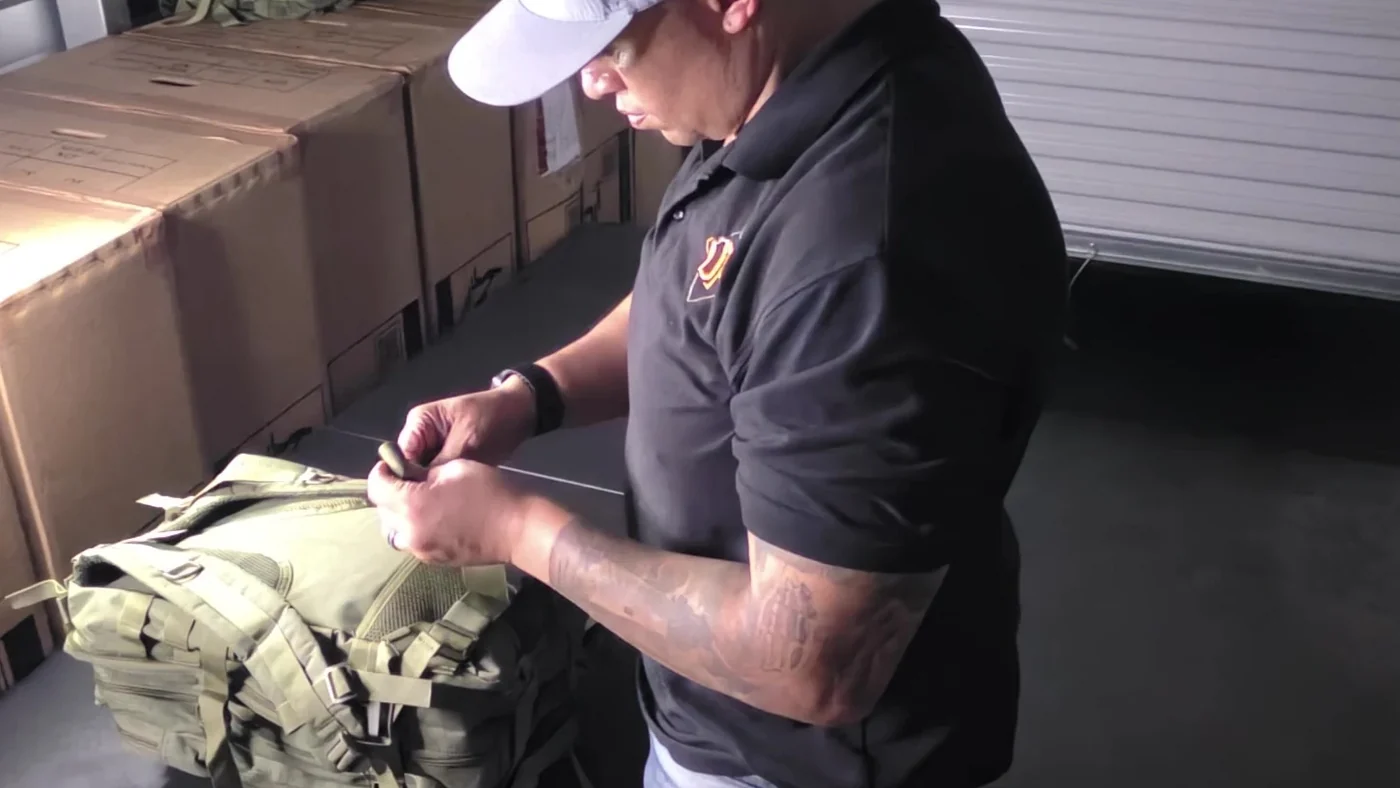
Not off a production line. One bag at a time, checked against the same list, by the person who chose what goes in it — so nobody sits between that decision and what ends up on your shoulder.
That’s deliberate, not a stopgap. It’s the reason I can tell you what’s inside without looking it up.
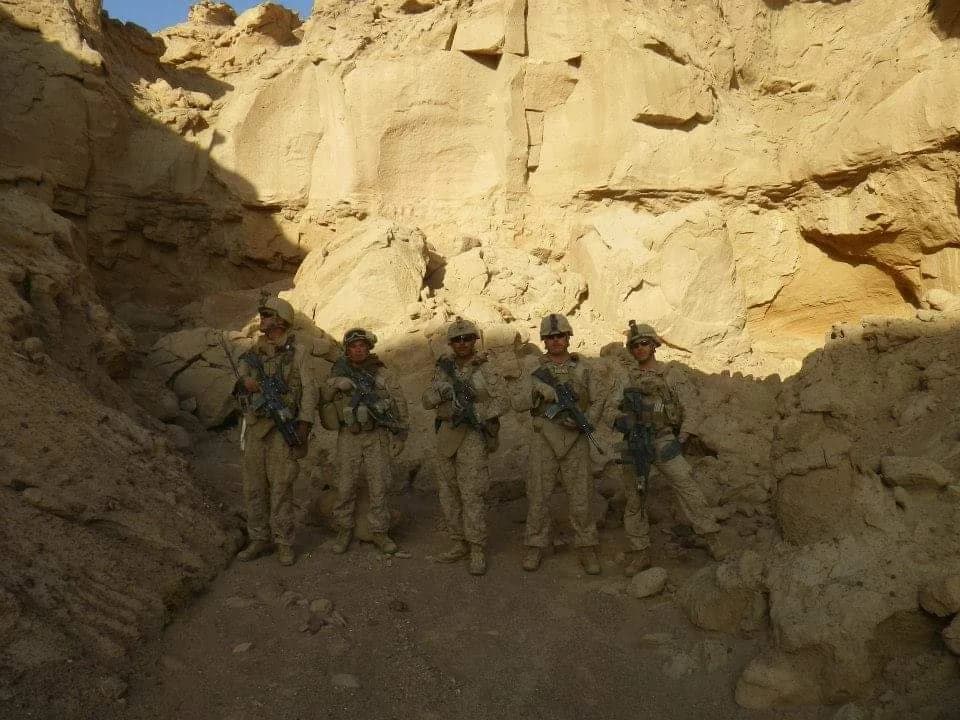
“We went out on a foot patrol that was supposed to take about two hours. A sandstorm closed in and it ran three days.
We were fine — not because we were tough, but because we’d packed for seventy-two hours we never expected to need. That’s where the number comes from. It isn’t marketing.”
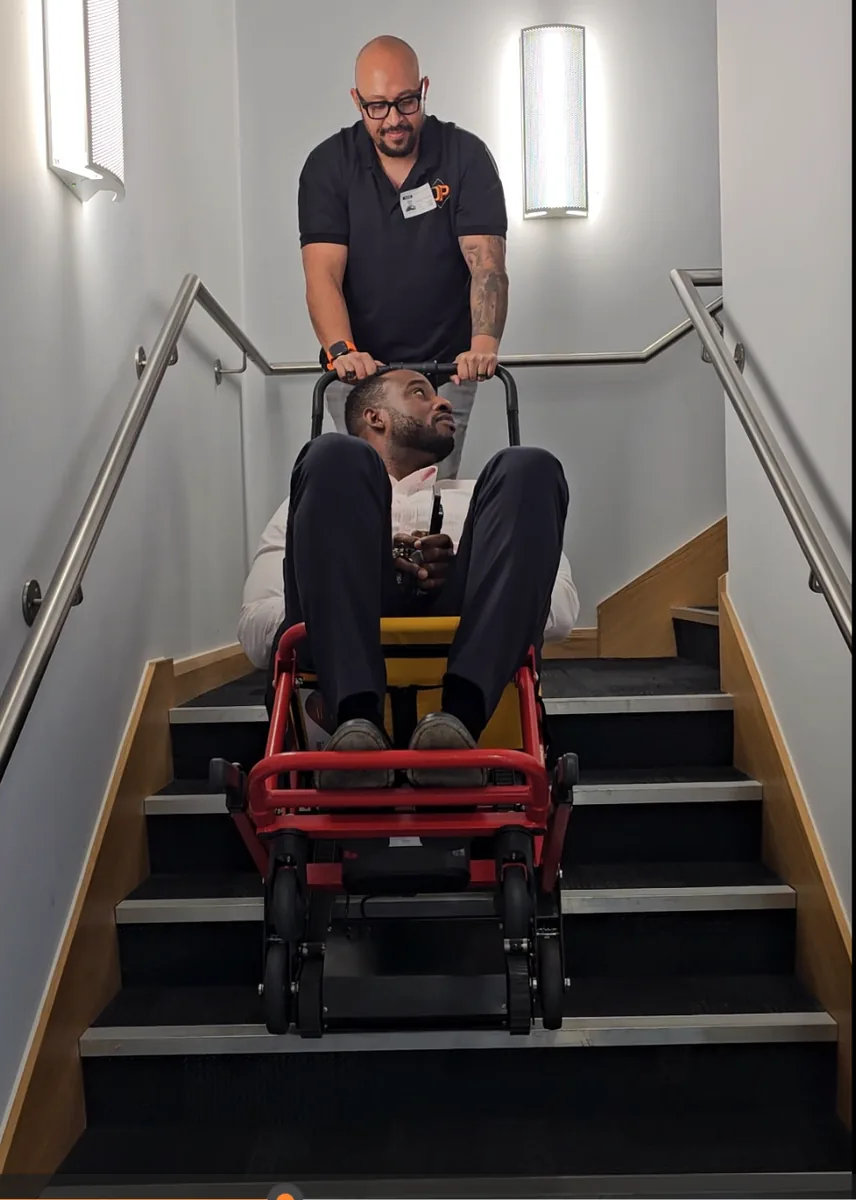
Outpost also equips the buildings you walk into — hospitals, airports, campuses, hotels and government facilities. Every building has an exit plan. Almost none have a plan for the people who can’t take the stairs.